


Our History
Born Humble, Built Classic
In 1978, two friends set out to make the finest wine they could from the finest sites they could find. Burt Williams and Ed Selyem launched the vineyard-designate movement, established Russian River Valley as a world-class Pinot Noir appellation, and pioneered the American wine allocation model. John Dyson doubled down on dirt, deepening the commitment to site and research. Today, winemaker Jeff Mangahas continues to foot-tread the grapes just as Burt and Ed did, while the Dyson and Faiveley families ensure the founding mission hasn’t changed.
We were just trying to make the best wine we could, to enjoy ourselves. We never imagined that we would become a cult winery capable of selling everything we made.

The Garagistes
Two Friends, One Big Idea
Before there was a mailing list, a cult following, or a perfect score, there was a leased two-car garage, a dairy tank, and two friends who just wanted to make great wine. Burt Williams and Ed Selyem didn’t set out to start a movement. They started one anyway.
1960s
At family dinners, there were always four wines at the table. We’d start with Champagne, move onto white, then red, then dessert wine. It ruined me.
Burt Williams grows up on the Russian River with limited means. Unable to swing college tuition, he enrolls in a six-year typographical apprenticeship in San Francisco. But he has a sophisticated palate, thanks to a gourmand French uncle, and thirsts for fine European wines he can’t afford. So in his early 20s, while working as a pressman, he makes his first wine, from a neighbor’s Zinfandel vineyard.

1970s
We primarily did what we were told by older Italian winemakers. Like, don’t borrow money.
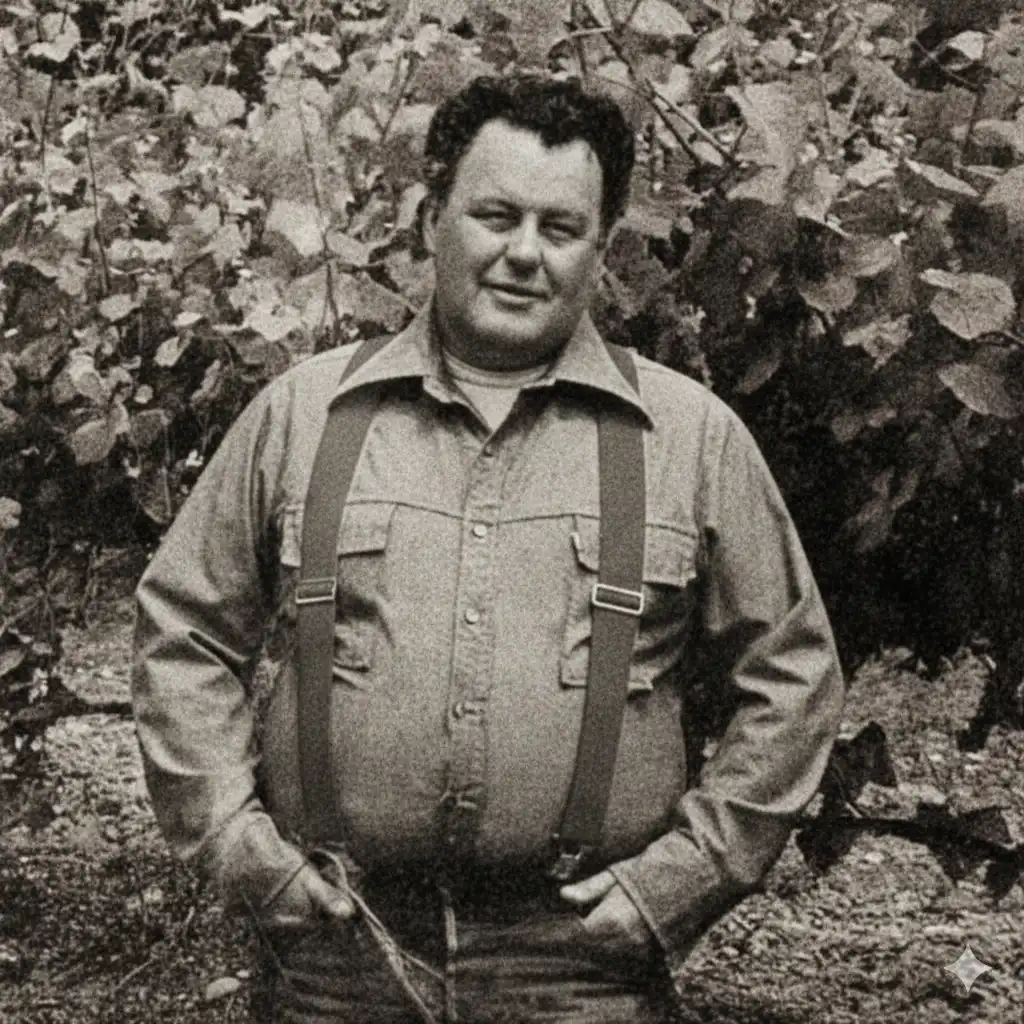
Burt finds a kindred spirit in Ed Selyem, a family friend and the wine buyer for Speer’s Market in Forestville, and the two haunt Burgundy tastings together. Ed makes beer and fruit wines at home; Burt takes a few winemaking courses at UC Davis. Finally, they work up the courage to vinify Zinfandel sourced from Lee Martinelli Sr.’s Jackass Hill Vineyard. They surprise themselves by making a surprisingly subtle, sophisticated, and frankly delicious wine.
LATE 1970s
We developed a strong relationship with Joe Rochioli. Lucky for us, since that’s what put us on the map.
Joe Rochioli is selling Pinot Noir to the duo and they’ve got their wings under them. Burt designs the inaugural 1979 labels, lifting an old illustration from The Pickwick Papers. He names the venture “Hacienda Del Rio” after his home in Forestville’s Hacienda Bridge section.
On the other side of the country, John Dyson, the New York Commissioner of Agriculture, helps pass the New York Farm Winery Act of 1976, making it easier for small wineries to start and sell directly to consumers. John purchases land and begins planting grapes in Hudson River Valley.

1980s
What I did was try to find out exactly how the Burgundians were doing it, and do that.

The two have gone full garagiste, foot-treading grapes in a rigged-up dairy tank, borrowing equipment from wineries like Russian River Vineyards and Litton Vineyard, and working out of a leased two-car garage on River Road in Fulton. Designer friend Graham Mackintosh creates a new label that “looks like a title page” of a book, a nod to Burt’s day job. Fellow winemakers discover the stuff and start passing it around, until an ATF agent and the Hacienda Winery get wind. Williams and Selyem realize that if they are going to do this, they’d better do it right. They rename the winery, get bonded, and they’re off to the races.
1985

Bon Appétit magazine names the 1982 Hacienda Del Rio Pinot Noir Best California Wine of the Year. Then, at the 1986 Wine Spectator Experience in New York, Burt is named one of America’s top new winemakers, and Charlie Palmer’s Aureole restaurant places an order.
It started with a dairy tank in a garage. Then, suddenly, we were in Michelin-star restaurants. What a journey.
1987
…The State Fair sweepstakes winner was fermented in an old milk tank salvaged from a Windsor dairy farm.
Of the 2,316 wines entered in the California State Fair Wine Competition, the 1985 Williams Selyem Rochioli Vineyard Pinot Noir wins the sweepstakes. The wine sells out. The ensuing attention ignites the vineyard-designate movement in the United States, establishes the Russian River Valley as a world-class region for Pinot Noir, and inspires young winemakers to skip modern interventionist tricks and embrace Burt’s old-school Burgundian ways.

We were just bowled over by the wines… With their garage and all, it was very reminiscent of a very small Burgundian winemaker.
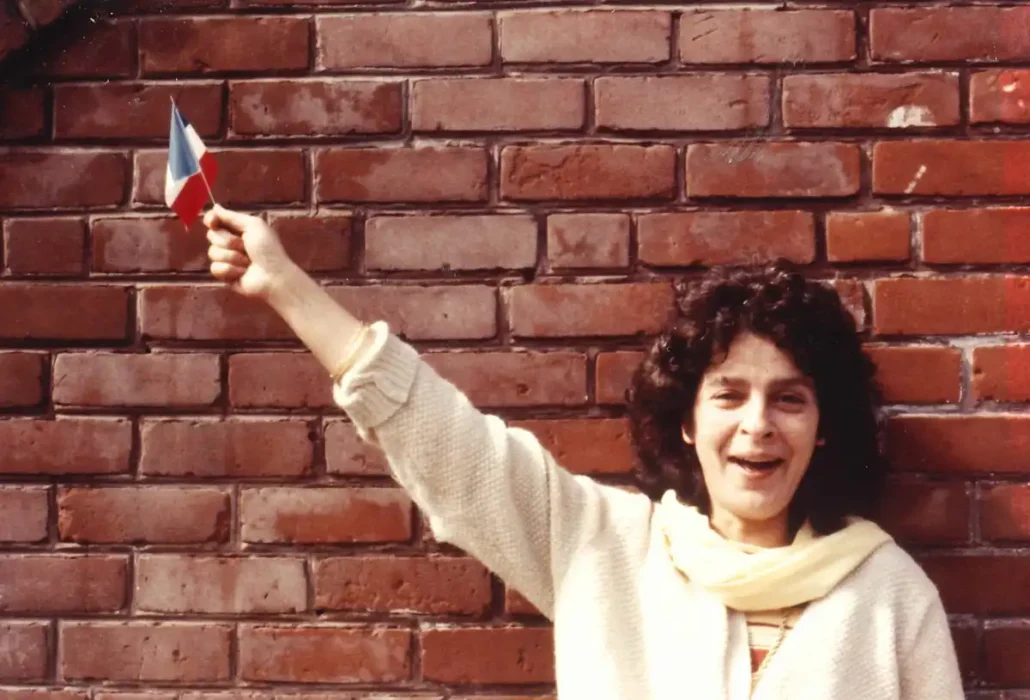
Legendary importer (and part-time exporter) Becky Wasserman shows up at Burt’s door with Burgundian vigneron Michel LaFarge in tow. After tasting the 1985 and 1986 Rochioli Vineyard Pinot Noir, Wasserman demands 50 cases so that she can do what’s never been done before: Sell California Pinot Noir in France. Burt only has only one case remaining of the 1985, and 25 cases left of the 1986. They shake on it.
1988
It’s the working together with the winemaker that creates great wine.

Westside Road grower Howard Allen walks into the Fulton garage and asks Burt and Ed if they’re ready for more space. He offers to put up a simple winery on his property, just across the road from Rochioli Vineyard. Allen lets the winemakers pay what they can per square foot, and gives them ten years to make him whole. The winemakers install their dairy tanks on an outdoor concrete crushpad under a tin roof, and their barrels inside the new, bare-bones building on Allen Ranch. In time, the Allen Ranch bottlings are among the most admired wines in the Williams Selyem portfolio.
LATE 1980s
Our Members get the wholesale deal. Every bottle leaves the building at the same price, no matter what.
Faced with overwhelming demand, the partners launch a groundbreaking allocation sales program to keep wine access fair, one handwritten order form at a time. Many of those early members never let go; today the WS List spans generations, with 2,800 members celebrating more than 25 years on the list. And the wines are never offered commercially for less than their original release price. There is no wholesale pricing. Membership is the deal.

1990
If there are other American-made Pinot Noirs that can stand up to great Côte de Nuits Burgundy, we haven’t tasted them.
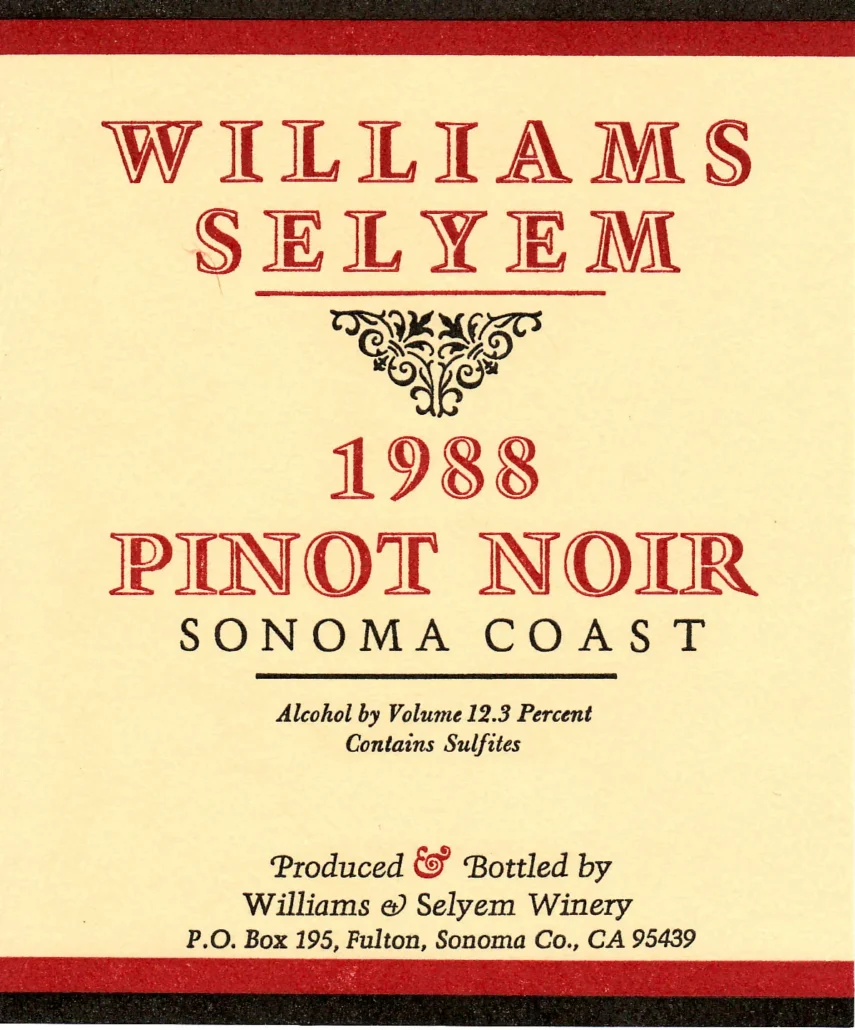
Burt and Ed are named one of the “Best Winemakers of 1989” by Wine Spectator, alongside Patrick Léon of Château Mouton-Rothschild, Tim Mondavi of Robert Mondavi, and Gary Andrus of Pine Ridge. Williams Selyem also earns its first Wine Spectator Top 100 Wines of the Year recognition for the 1988 Sonoma Coast Pinot Noir.
1991
If people don’t buy it, we’ll just take it all home and drink it. C-note or see none!
The 1991 Williams Selyem Summa Vineyard Pinot Noir becomes the first California Pinot to sell for $100 a bottle. It’s the only usable Summa crop in three years, and they’ve already paid the growers up front. Yields are brutal: two barrels, or about one ton of usable fruit from four acres. Price set, they hold their breath. The wine sells out in three days.

Early 1990s
One bottle and one customer at a time.
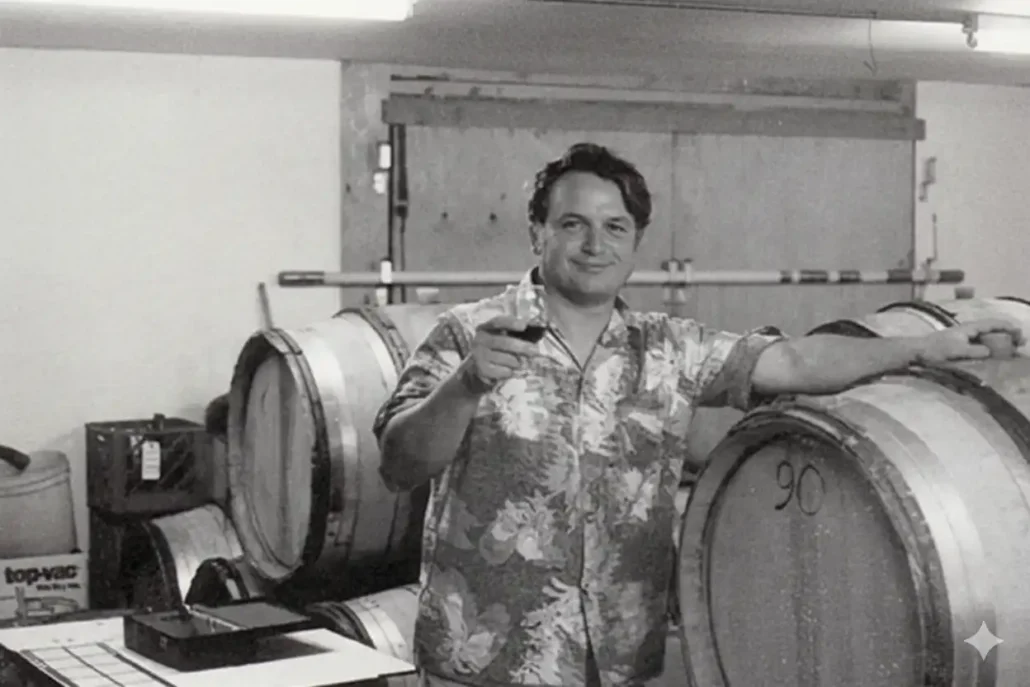
After years of never taking money out of the business and always pouring profits back in, Burt and Ed finally forsake their day jobs for full-time winemaking. They still haven’t hired help, working alongside their wives Gayle Selyem and Jan Williams. They hold back a significant amount of their production for their own enjoyment, shun publicity, and never open a tasting room or post a sign.
1990s
The best Pinot Noir in America—and a rival to the best in the world—will be shipped to a lucky few next month. Most wine buyers will never even know about it.
Burt and Ed deepen their commitment to single-vineyard Pinot Noir, introducing bottlings from some of the coast’s most revered growers. Ferrington débuts in 1992, followed by both Hirsch and Coastlands in 1994. It is during this era that Kathe Dyson—a lifelong red Burgundy devotée—tastes Williams Selyem for the first time at a Masters of Food & Wine luncheon where Ed Selyem is pouring. Turning to the stranger beside her, she declares she has never tasted a California Pinot Noir that holds up to Burgundy, until now. That stranger is Burt Williams. Kathe convinces Burt and Ed to add her directly to the list, bypassing the wait entirely.
Meanwhile, François Faiveley, the sixth generation to lead his family domaine in Nuits-Saint-Georges, France, stumbles upon Williams Selyem Pinot Noir and is impressed with the remarkable consistency and high level of quality of the wines in comparison with their American peers. Williams Selyem becomes his default wine-list selection whenever he is dining in the United States.

Becky Wasserman, who was surely one of the finest palates in the world, loved Williams Selyem wines, and that only strengthened my conviction.

The Ag-vocates
Roots Down, Standards Up
When John and Kathe Dyson took the reins in 1998, they inherited a legend and chose to tend it like the vineyards they already farmed: patiently and methodically, with serious attention to the soil. Their era defined Williams Selyem not just as a winery, but as a steward of the land.
1998
I’ve never worked so hard to change nothing.

In keeping with their direct-to-consumer ethos, Burt and Ed sell the brand to longtime WS List Members John and Kathe Dyson, wine insiders and agriculture experts who share their values and are determined to maintain Burt’s standards. Following the sale, clone fanatic Bob Cabral steps in as winemaker, working alongside Burt to uphold the Williams Selyem focus on growers and low-intervention winemaking.
THE 1990s
Healthy vines start long before planting day: with ultra-clean, carefully selected material that will thrive for decades, not just survive the first few seasons.
The Dysons have owned Vista Verde Vineyard, in San Benito on the Central Coast, since 1990. They’ve replanted with the best clones of more than fifteen different grape varieties, including nineteen clones of Pinot Noir. An agrarian by education and persuasion, John Dyson develops a proprietary Williams Selyem nursery at Vista Verde that custom-propagates “triple clean” vines and offers them to grower partners at half the price a commercial nursery would charge, ensuring health and quality across the program.

We have not yet found a variety it does not work on: Syrah, Chardonnay, you name it.
In conjunction with Richard Smart, a worldwide authority on vineyard development, John Dyson develops the Smart-Dyson vine training and trellis system following trials in the early 1990s. The double canopy of the single-curtain system reduces vine vigor and improves photosynthesis, resulting in high-quality grapes. The Smart-Dyson system is today used in tens of thousands of acres of vineyard worldwide, particularly in windy coastal regions.

1998-2000
Burt had a profound impact on my way of thinking of winemaking and it was some of his early wines that fueled my interest in the Russian River Valley.

A young medical researcher from Washington State named Jeff Mangahas is living in New York and immerses himself in the fine dining restaurant scene. He tastes a 1996 Williams Selyem Allen Vineyard Pinot Noir and it sparks his passion for wine. He soon joins the List, dives deep into wine culture, and moves to California to study winemaking.
2001
John Dyson acquires Litton Vineyard, renames it Williams Selyem Estate, and commissions a new “temple to Pinot” at the center of where it all began, “the heartland of the heartland of California Pinot Noir.” Under Dyson’s ownership, the winery adds two additional Estate vineyards: Lewis MacGregor Vineyard on Eastside Road and Drake Estate, a former apple orchard on the banks of the Russian River.
The Middle Reach of the Russian River was the prime Pinot Noir growing area. This was—and still is—the Côte d’Or of California.

THE 2000s
Pinot Noir lovers don’t need much motivation to visit Russian River Valley… but Williams Selyem is giving them more.
John Dyson commissions a new “temple to Pinot” at the center of where it all began, “the heartland of the heartland of California Pinot Noir.” Under Dyson’s ownership, the winery adds two additional Estate vineyards: Lewis MacGregor Vineyard on Eastside Road; and Drake Estate, a former apple orchard on the banks of the Russian River. In acquiring these three properties, Williams Selyem continues with a longtime role as a steward of old land, old vines, and the stories that go with them.

2002
I have a long friendship and history with America, a passion for its wines and people.
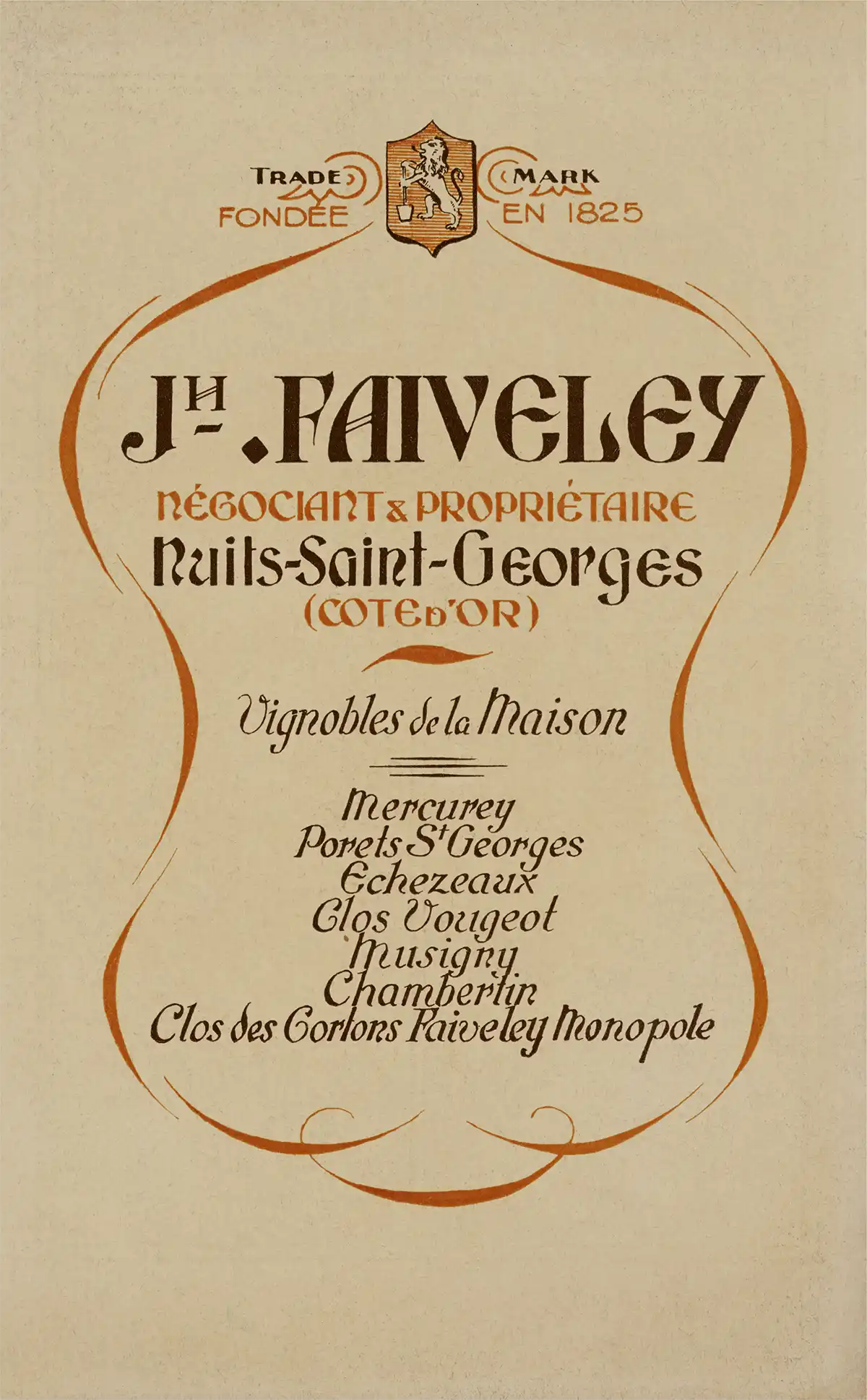
Erwan Faiveley, seventh-generation vigneron at Domaine Faiveley in Burgundy, is twenty-three years old and living in Philadelphia when he orders a bottle of 1995 Williams Selyem Rochioli Vineyard at Le Bec Fin restaurant. A Burgundian to his bones, he knows what great Pinot Noir tastes like, and this is it. The encounter stays with him.
2003
Burt had a profound impact on my way of thinking… It was some of his early wines that fueled my interest in the Russian River Valley.
Mangahas graduates from the University of California, Davis with a master’s degree in viticulture and enology. He begins working at respected Russian River Valley Pinot Noir houses, including Dutton-Goldfield and Hartford Court.

2009
A spectacular Pinot Noir… from a great vintage that needs time in the bottle to express itself. Best after 2013, if you can keep your hands off.
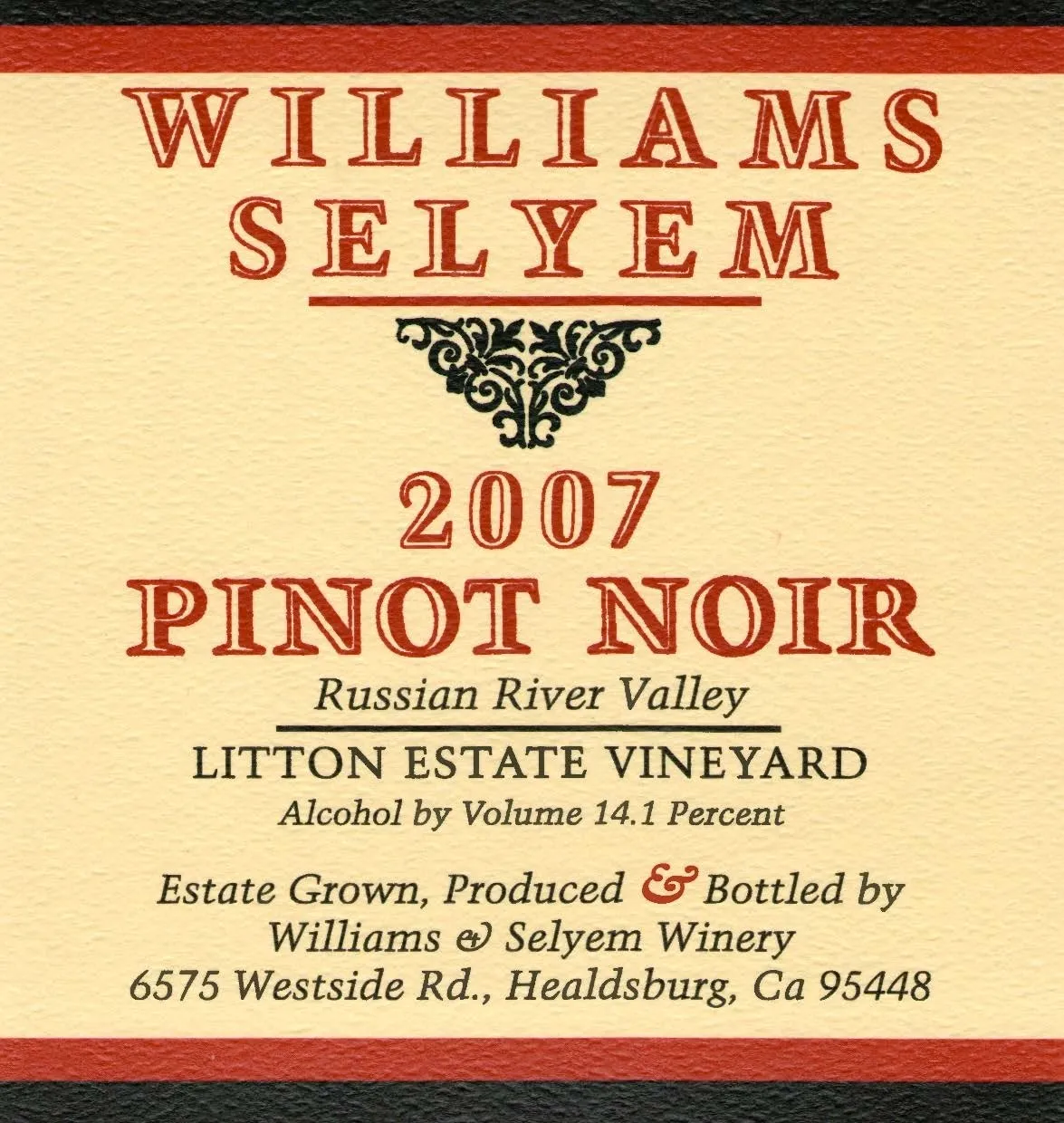
Wine Enthusiast magazine awards our 2007 Litton Estate Pinot Noir 100 points. It’s the first time a major wine publication has awarded California Pinot Noir a perfect score. The Williams Selyem team takes enormous pride in the fact that this prestigious honor has gone to a wine made entirely with grapes from our home Estate vineyard.
2010s
There’s a lot of excitement around here about the past, the present, and the future: Where we’ve been, where we are, and where we are going.
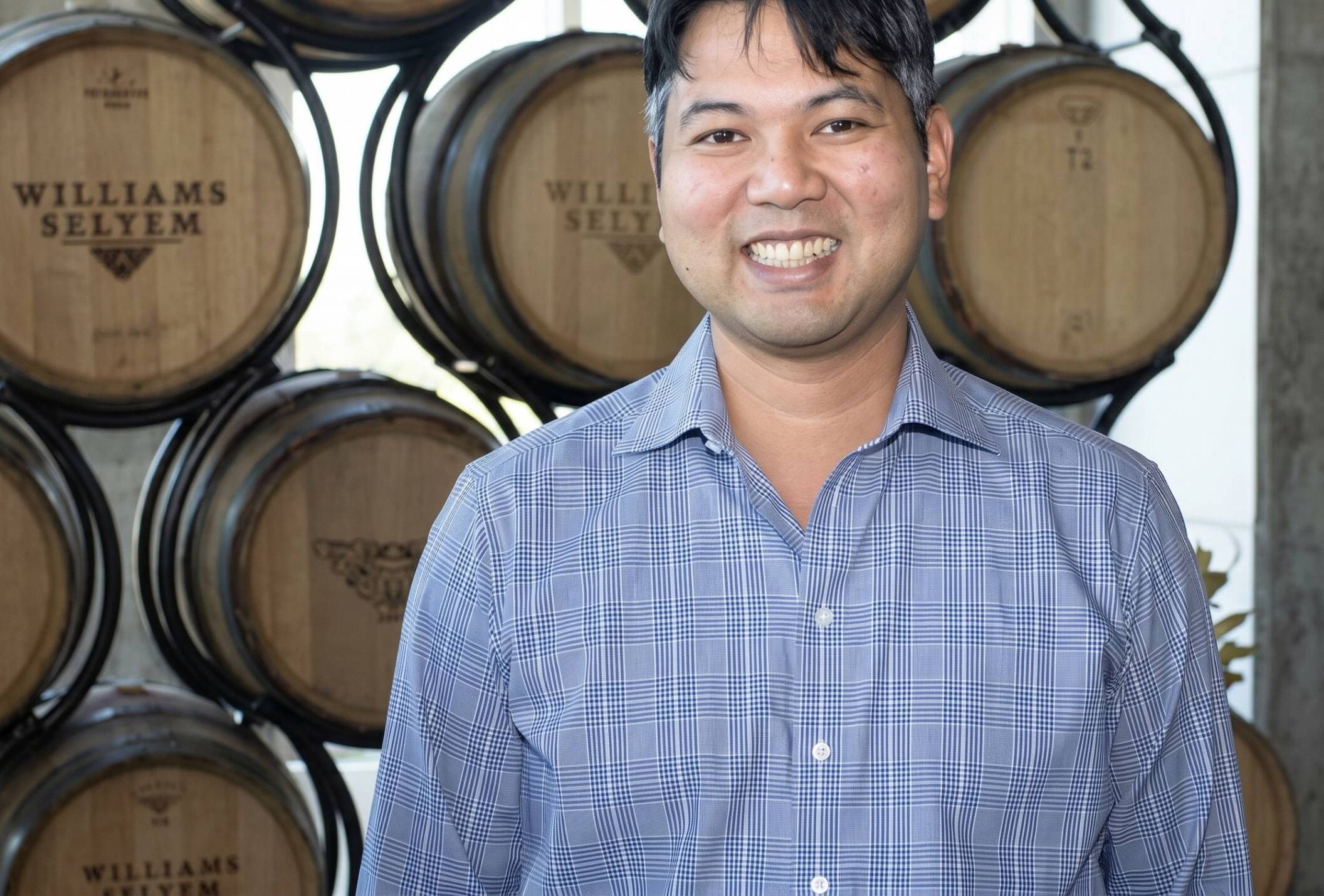
Jeff Mangahas joins the team in 2011, leaning into Burt Williams’s minimalist methods and John Dyson’s fanatical attention to detail. He is mentored by Bob Cabral for a year before becoming head winemaker. While much of the wine world is expanding, vinifying in 10- to 15-ton tanks, Mangahas sticks to small-barrel, micro-lot practices, vinifying just 200 cases at a time even as overall production slowly grows.
2016
It breaks my heart to see several of our finest heritage vineyards being ripped out in favor of other higher- producing premium varieties.
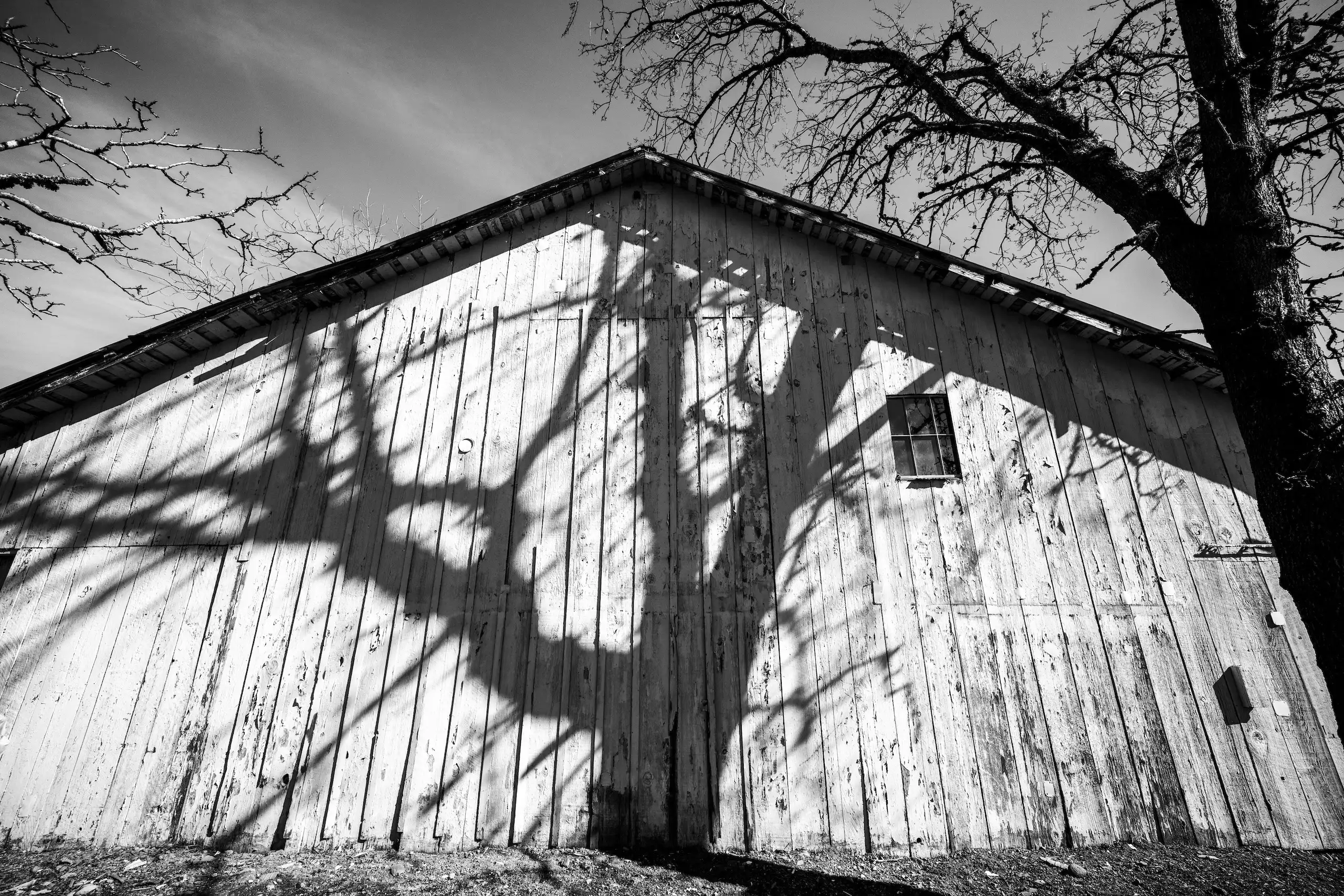
Williams Selyem purchases Saitone Ranch, bringing this 1895-planted, dry-farmed field blend of Zinfandel and more obscure varieties into the estate fold. The acquisition reflects both a return to the winery’s old-vine Zinfandel roots and a deliberate effort by John Dyson and Jeff Mangahas to keep historic, low-yielding vineyards like Saitone in the ground, even when they are less profitable than younger, more prolific sites.

The Vignerons
Grand Cru Discipline, New World Passion
The arrival of the Faiveley family in 2021 brought us a partner who understood Williams Selyem not as an acquisition, but as a kindred spirit. Seven generations of Burgundian discipline met decades of California terroir obsession, and the winery has been the better for it ever since.
2017
As Burgundians, we were looking to grow the best Pinot Noir and Chardonnay in the United States.
Seventh-generation Burgundian vigneron Erwan Faiveley has spent a decade leading his family’s domaine, focusing on the acquisition of prized Grand Cru and Premier Cru vineyards in Burgundy, renovating the cellars, and adopting organic farming methods. He discusses the idea of making wine in America for the first time with his father, François, and sister, Eve.

2020
I think of us as single site expressionists. For us, it’s long been about expressing the uniqueness of different varieties from different places.
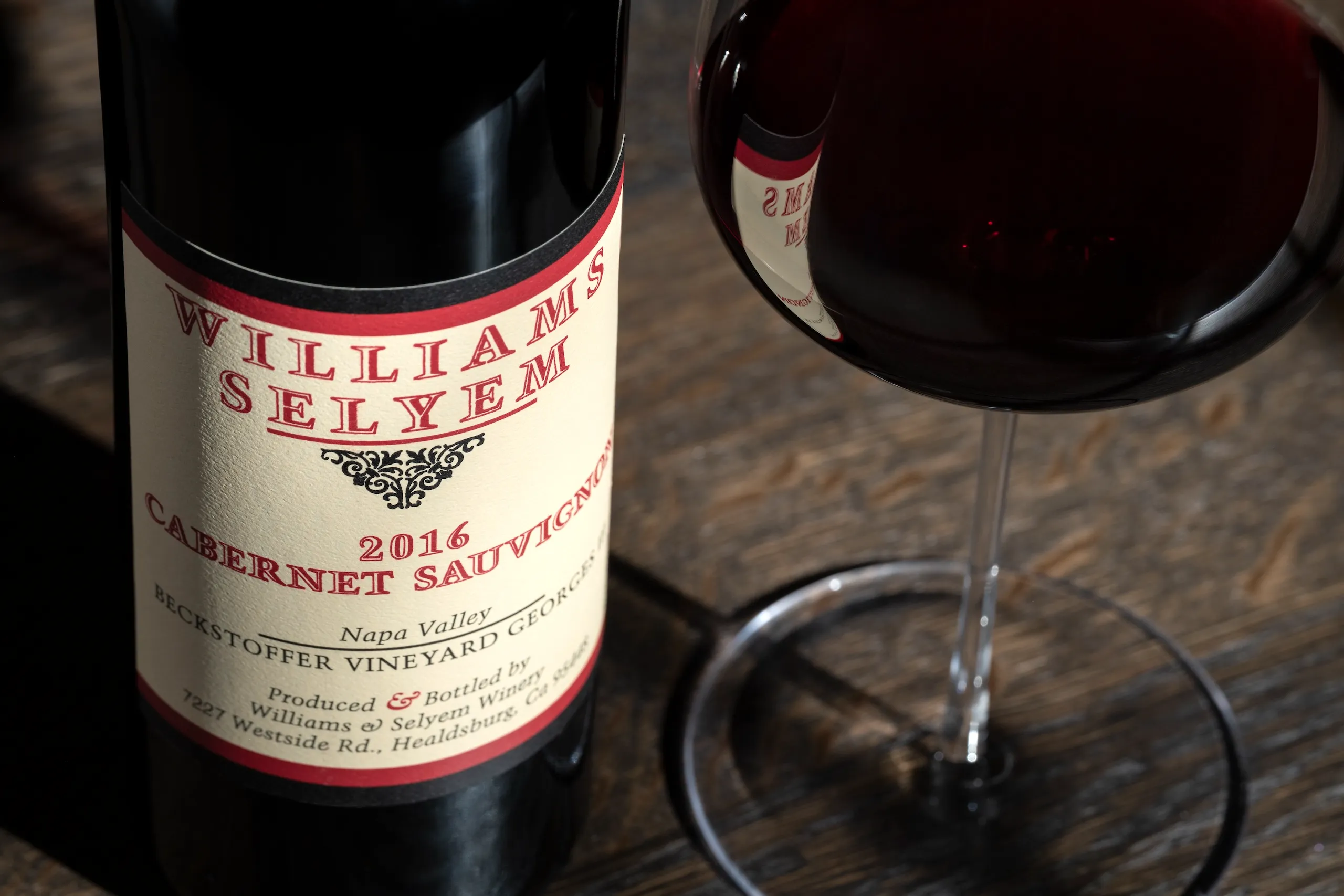
Driven by curiosity for old-vine sites and a desire to push beyond the boundaries of Russian River Valley Pinot Noir, we venture into Napa Valley Cabernet Sauvignon with the 2016 Beckstoffer Vineyard George III bottling from Rutherford. In 2019 and 2020 respectively, Jeff Mangahas adds two landmarks from Oakville: Beckstoffer Missouri Hopper and Beckstoffer To Kalon Vineyards. Planted in the 19th century and interpreted through Williams Selyem’s low-intervention lens, these historic sites yield Cabernet Sauvignons of silken texture and finely tuned tannins.
2021
Sonoma County and especially Russian River Valley was natural for us, and Williams Selyem has always been one of our favorite wineries.

After 23 years running Williams Selyem, John Dyson searches for a successor. A friend introduces him to Erwan Faiveley, whose family purchases a minority stake in our winery. Based in Nuits-Saint-Georges, the Faiveley family owns more than 120 hectares of vines in outstanding terroirs including 12 Grands Crus and 25 Premiers Crus. Founded in 1825, it is one of Burgundy’s most renowned domaines.
2024
Williams Selyem makes 52 wines each year. It’s completely crazy, but not to the Faiveleys. Erwan makes 72 wines each year. That’s the Old World mentality.
The Faiveley family assumes majority ownership of Williams Selyem. The partnership between these two houses keeps reverence for terroir and respect for tradition at the center of the story. Jeff Mangahas continues to run day-to-day winemaking, and John Dyson stays on as advisor. Much has changed, but the way the wines are made has not.

2025
We’re not going to change anything. We have a great team, a great location and I love the style of wines.
To further our commitment to small-lot winemaking, Williams Selyem adds a purpose-built production facility closer to downtown Healdsburg. The new winery is designed around function and temperature control, allowing us to handle each vineyard lot with even greater precision. The Estate winery on Westside Road continues to be our architectural landmark, working cellar, and scenic setting for visits and tastings.

The 2023 vintage is a mic drop year for California Pinot, a consistently cool growing season that led to a late harvest. Mangahas hit the mark, earning this Russian River Valley bottling a rare back-to-back appearance in our Top 10.

The 2023 Williams Selyem “Eastside Road Neighbors” Russian River Valley Pinot Noir ranks No. 4 in Wine Spectator‘s “Top 100 Wines of the Year,” marking a rare second consecutive Top 10 appearance for this bottling. The accolade underscores how a carefully assembled Russian River Valley blend can stand alongside the most coveted single-vineyard wines in the cellar, and confirms that Williams Selyem’s vineyard-first approach is as compelling at scale as it is in micro-lots.
From a Sonoma garage to Wine Spectator’s Top 100, our goals have never changed: Find the finest fruit, trust the land, and resist the temptation to over-explain what’s in the glass. As Williams Selyem approaches its 50th anniversary in 2029, the work continues in the same spirit it began. There will always be terroirs to explore, new vintages to earn, and a member community that has been along for the ride since before most of the world knew what Russian River Valley Pinot Noir could be.
The more we move away from Burt and Ed in time, the closer we need to return to them.